
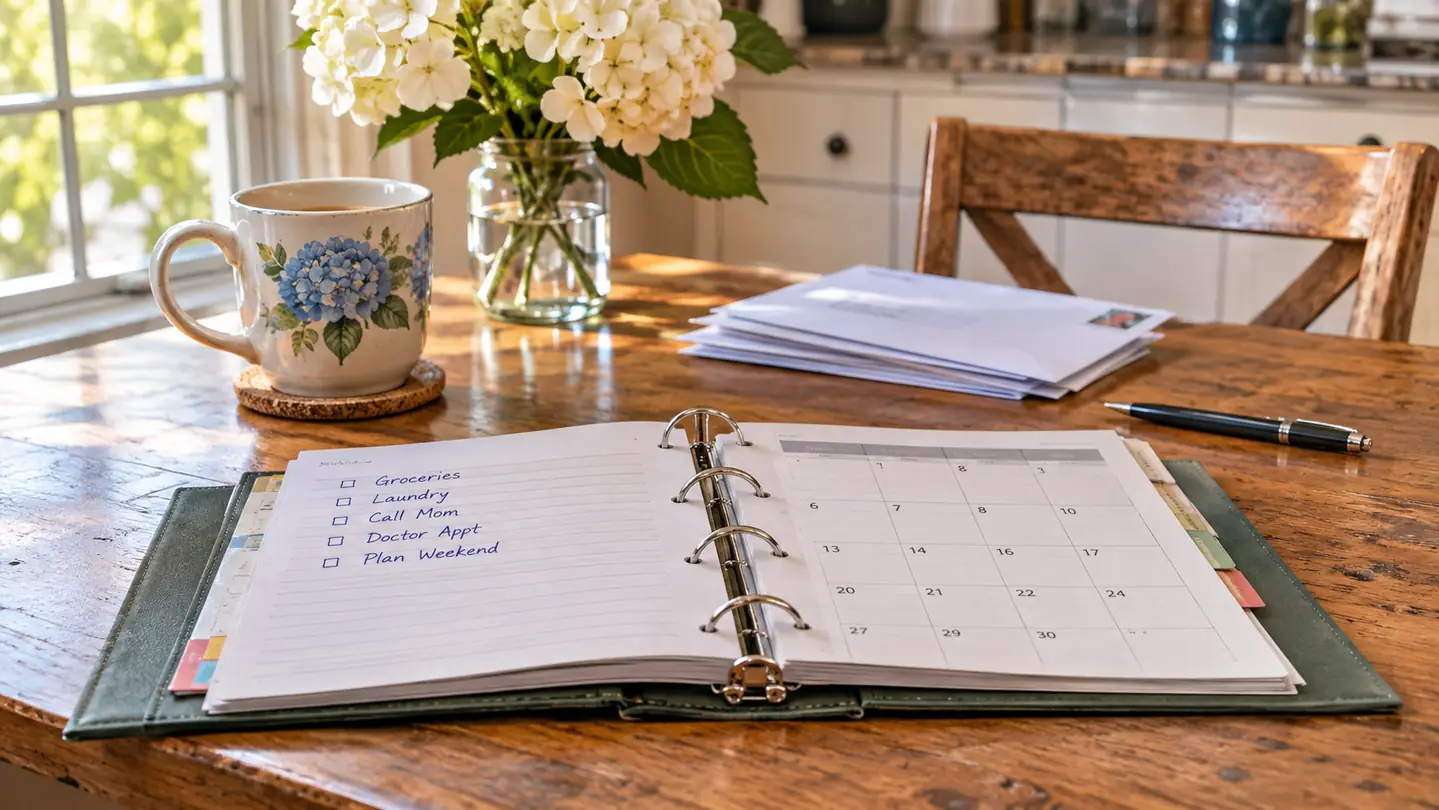
Elise got engaged on Thanksgiving weekend and started a spreadsheet on her laptop almost at once. She dropped it after two weeks. That is not a knock on her. A wedding is not a spreadsheet problem. It is a paperwork problem, and paperwork wants a spine. So the first week of December I ordered The Knot Wedding Planner and Organizer, the revised binder edition, and set it on the kitchen table. It stayed there for six and a half months, right up to the Wednesday in June we flew to New Mexico.
Here is what I want to give you up front, because I read a great many reviews before I bought and most of them were written by somebody who had owned the thing for a week. This is a longer look. Six and a half months, one wedding, 72 guests across nine round tables, no paid planner, and a mother of the bride who is not a professional anything. I am not going to tell you it made planning easy. It did not make planning easy. It made planning finishable, which is a different and more useful thing.
The Quick Verdict
A binder that turns a wedding from a hundred open tabs into a stack of pages you can finish. Buy it the week you get engaged, not the month before.
Amazon Check Today's Price →The first thing to buy after the ring, before you book the venue
144 pages, room to write in the margins, and a spine that survives a carry-on. Months after the wedding ours is still on the hall shelf with the guest list in the back.
Amazon Check Today's Price on Amazon →How I've Used It
I bought it the first week of December, the week after the engagement, and I want to be honest about why. Not because I am organized by nature. Because a wedding planned off a phone and loose scraps of paper sounded like a wedding I would spend chasing, and I wanted one place to look. A spreadsheet holds numbers. It does not hold the confirmation email from the inn, the seating chart you redrew in April, and the note from your cousin about a plus-one, all in the same place where you will look for them in June.
For six and a half months it lived on the kitchen table in Savannah. Not in a drawer. On the table, beside the salt, which is where Paul ate his breakfast and ignored it. That was on purpose. A planner you have to go fetch is a planner you stop fetching somewhere around March, and March is exactly when a wrong decision costs you the most time to undo.
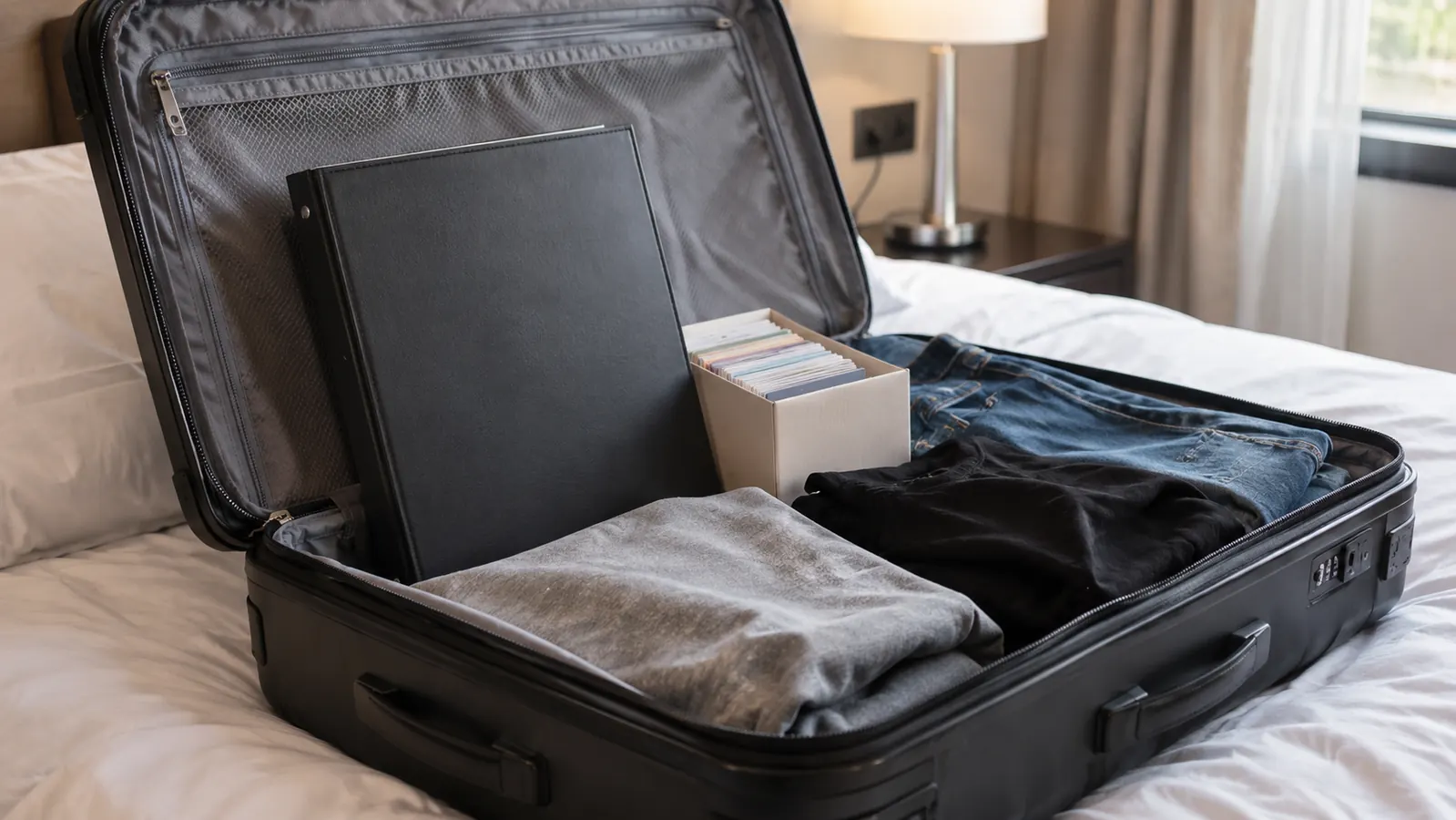
It flew with me, too. Savannah to Albuquerque with the connection in Dallas, in my carry-on, with the place cards flat in a shoebox in my suitcase. It measures 11.84 inches tall and 10.42 wide and weighs 2.75 pounds, so it is not a paperback you tuck into a purse. It is a binder. Carry it like one and it travels fine. Wedge it into a backpack and the corners will go soft by the second trip.
What I used it for, day to day, was narrower than the marketing suggests and more useful than I expected. It held the guest list, it held the vendor contracts and the confirmations, and it gave Elise and me one place to look when one of us asked a question the other had already answered in writing. Half of planning a wedding without a planner is answering the same six questions in different words. This cut that in half, and by April I had stopped repeating myself almost entirely.
What's Actually Inside the Binder
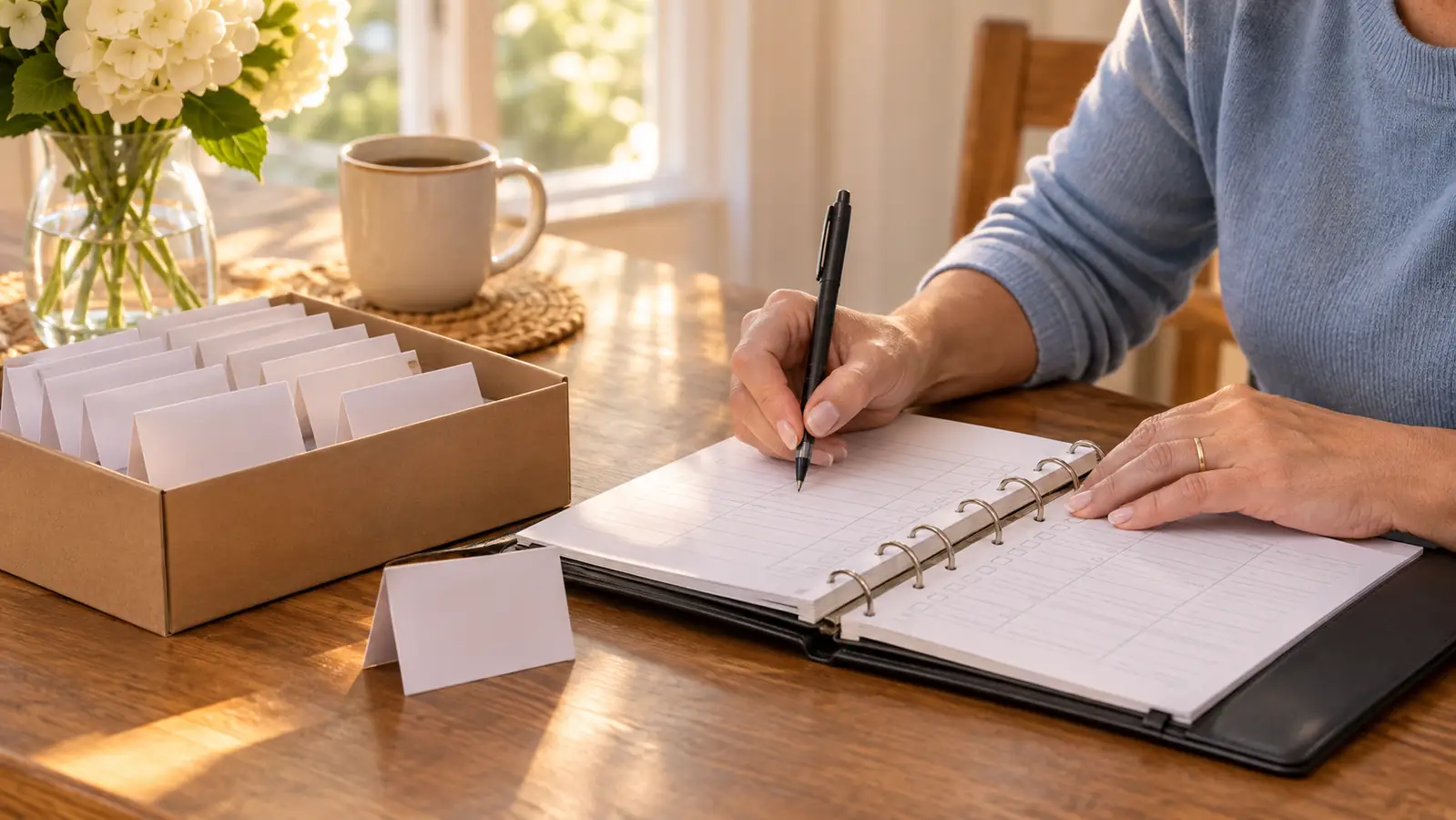
It runs 144 pages, published by Clarkson Potter, revised and updated in December 2021, illustrated. The sections arrive in the order the decisions actually come at you: the long view first, then the choices, then the months, then the week of. The Knot builds it around the assumption that you have never done this before, which for most of us is the whole point. There are pages to read and pages to fill in, and there is room in the margins, which I used harder than I used any of the printed advice, because our wedding was not the printed wedding.
One practical note about the size, because it matters more than you would think from a listing. At 10.42 by 11.84 inches it is bigger than a sheet of copy paper, which means the pages inside are bigger too, which means the columns on a guest list actually fit a name, an address and a meal choice on one line instead of three. It lies open on a table without being held. I taped a flat envelope inside the back cover for receipts and the inn's confirmation, and I would do that again on day one. A binder this size is a desk object. Give it a desk.
About that printed advice, since it is the thing reviews argue over: it is general. It will not know your venue's rules, your florist's schedule, or the fact that one of your guests cannot do stairs. What it does is keep you from skipping an entire category of decision, and skipping a category is the real failure mode when you are planning alone at a kitchen table with a daughter who lives a few hours away.
Elise read the early sections. I read the month by month and the week of. Paul read none of it, which was the arrangement and was fine. The binder does not need two people to use it. It needs one person to open it and one other person to trust that person, and if you do not have the second thing, no binder on the market fixes it for you.
What It Doesn't Do
It does not remind you of anything. There is no alert, no ping, nothing that taps you on the shoulder. If that is what you need, you need your phone, and Elise tried a free planning app for a couple of weeks in December and got some real use out of it before she stopped opening it. I am not going to pretend the app was the problem. She is 29 and working full time, and an app you have to remember to open is the same as a binder you have to remember to open, minus the part where the binder is already sitting next to the salt.
There was a stretch after the dress was bought when little needed doing and the binder sat open at the same page for a couple of weeks. I want to say that plainly, because a review describing six months of constant activity is describing something that did not happen. Weddings have lulls. The lull is when you should be resting, not hunting for a task to justify the book. What it did during that stretch was sit there and remind me, without saying a word, that the next thing had a page and would wait for me until I got to it.
It also will not sort the guest list for you. The pages give you structure; the writing is yours. In our house that meant evenings at the kitchen table in December and January, and by the end I knew the names better than I knew my own neighbors. If you want the names to organize themselves, this is the wrong tool. If you want them somewhere you can carry to a venue, it is the right one.
How It Held Up Over Six and a Half Months
Six months of daily handling is a real test for a book with a spine, so here is the inventory. The corners have softened from being carried. The pages near the back are the most worn. There is a pencil impression two pages deep from months of writing at the kitchen table. None of that is damage. It is evidence, and I would rather have the evidence than a clean book.
The clearest record of use is in the seating pages. In April, the question of which table Paul's two brothers sat at got redrawn over most of a Sunday afternoon, and you can see every one of those attempts in the book, because I worked in pencil and pencil shows through. By the last version I was pressing. That page is now a short history of a disagreement that got settled and stayed settled. Nothing digital would have kept that record, and the record is the thing that let me stop arguing with myself about it.
Nothing has fallen out. No page has torn. The binding is still square, which surprised me given how it rode in the carry-on between here and New Mexico. The only real wear is at the top of the spine, where I have lifted it off the table by one corner more times than I can count. That is cosmetic, and it is what happens to any book you use rather than display.
The weight is the one thing that changed my habits. 2.75 pounds is nothing in a suitcase and it is a good deal in a tote bag. I carried it to vendor meetings anyway, and by the third errand I could feel it. That is not a fault in the planner. It is a fault in my shoulder.
Six and a half months, 72 guests, one wedding, no paid planner. The binder is the only thing I never had to go looking for.
The Week Of, When It Really Mattered
The planner earned its place in the last ten days. The day-of bag was packed by then, the seating chart was folded inside the binder, and when we flew out on Wednesday June 10 the binder came with us and sat open on the desk at the inn. On Saturday afternoon there was exactly one thing to handle, and the sewing kit was in that bag because I had put it there in May. The answer was in a place I could find at twenty past three on a wedding day, and that is the entire argument for paper.
The week of, I worked off an index card, not the binder. I had made the day-of list in the binder in May and copied it onto a card the size of my palm, and the card is what went in my pocket on Saturday. The sewing kit, the pouch of wipes and blotting papers, the front desk number for the inn. Checking items off a card over three weeks is a slower way to pack a bag than doing it the night before, and a much more reliable one. The binder is the list. Somebody still has to read the list.
What I Liked
- One place for the guest list, the contracts, and the questions you have already answered
- 144 pages with real margin room, so it holds your wedding instead of a generic one
- Sturdy enough for six and a half months of daily use and a round trip in a carry-on without a torn page
- Organized in the order decisions actually arrive, so no category gets skipped
- Works for one person, which is how most weddings really get planned
Where It Falls Short
- 2.75 pounds is more than you want in a tote bag, and you will feel it by the third errand
- The printed guidance is general and will not know your venue, your vendors, or your family
- It is a book, so it will not remind you of anything on its own
- If you plan on a phone, this will feel like the wrong tool from the first page
- The revision dates to 2021, so anything that changes year to year needs checking elsewhere
Who This Is For
This is for the person who is actually doing the planning, which in most families is one person, and it is usually not the person who assumed it would be them. It is for a wedding with a real guest list, real contracts, and a venue with its own rules, and for someone planning from half a country away, which is what we were doing, Savannah to Santa Fe, with a daughter who works full time and a mother who has opinions about place cards. The Knot designed this for one person at a table, and that is exactly what it got.
It is also for the mother of the bride who wants a job and would rather have a useful one. I ran the binder, the place cards, and the day-of bag. That was enough to be helpful and not so much that I was running somebody else's wedding. If you are looking for a place to stand that is busy without being in charge, this is a good place to stand.
Who Should Skip It
Skip it if you have hired a full-time planner who is running the process. You are paying someone to hold the thread, and a binder on the kitchen table is a second, competing thread that will confuse the person who is supposed to be helping you. Skip it, too, if you are planning a wedding of twenty people in your own backyard, where the whole thing fits in one conversation and one folder.
And skip it if you know yourself well enough to know you will not open a book. There is no shame in that. The Knot could print the thing on gold leaf and it would not help a person who plans from a phone. The worst outcome is buying it in March, filling in four pages, and carrying a 2.75 pound guilt object around all summer. Buy it in the first week, or leave it on the shelf for somebody whose brain works this way.
Buy it the week you get engaged, not the month before
The pages you will want most are the early ones, and the early ones are exactly what you skip when you buy late. Ours has six and a half months of handwriting in it and the guest list in the back, and I would order it again on the Tuesday after Thanksgiving without thinking twice.
Amazon Check Today's Price on Amazon →