
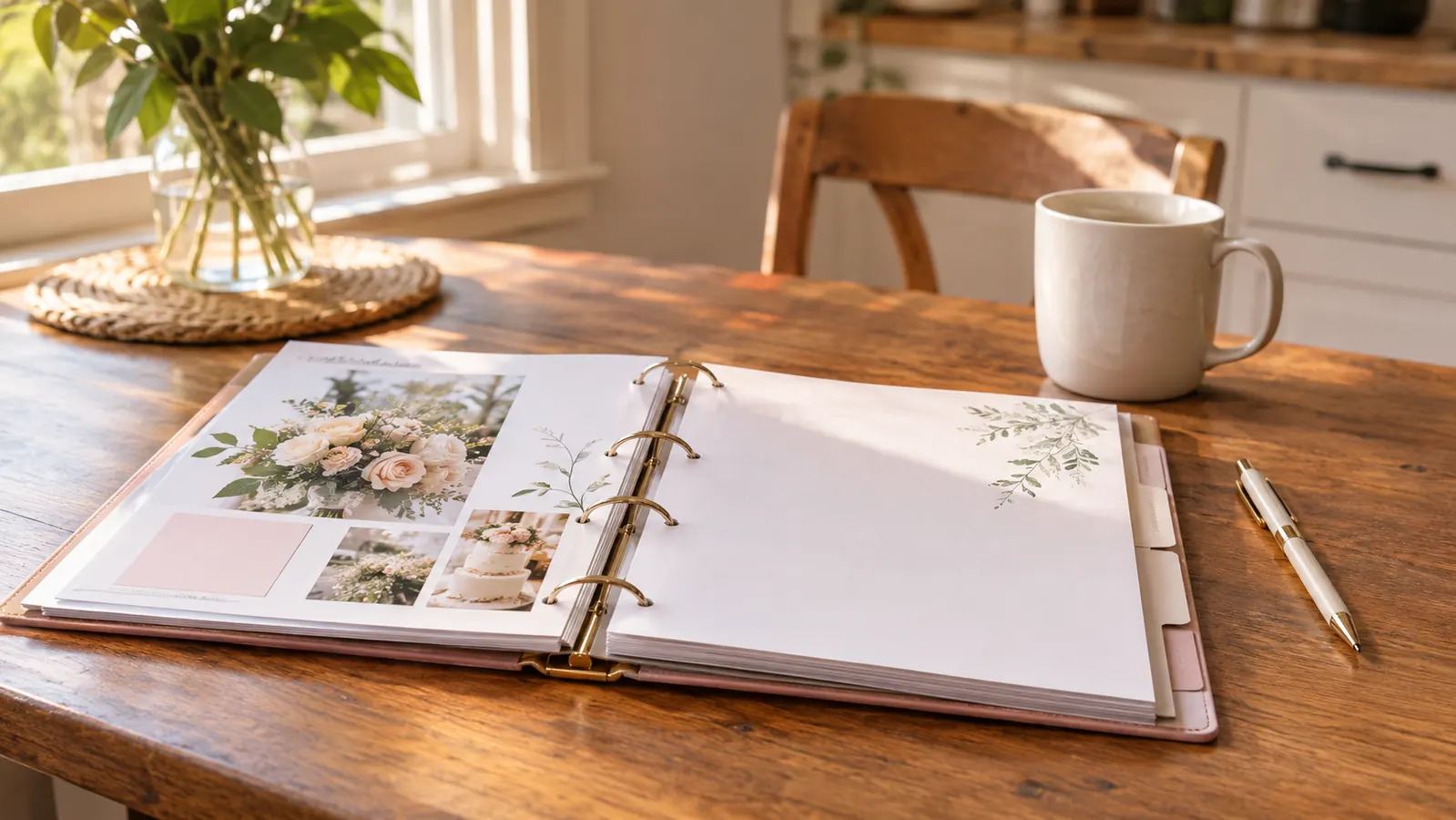
My daughter Elise got engaged on Thanksgiving weekend and had a spreadsheet open on her laptop before the plates were cleared. It lasted two weeks. By then it had a color code she could not explain to me, and she had stopped opening it. I bought The Knot Ultimate Wedding Planner and Organizer the first week of December, the week after the engagement, and it sat on our kitchen table from that day until we flew out in June.
I am not against computers. I ran a school office for thirty years. But there is a difference between storing information and being able to find it while a rental car idles outside an inn in Santa Fe with seventy-two guests arriving Friday. Here is what the paper planner gave us that the laptop never did, in the order I actually noticed it.
The binder that survived six and a half months of planning and a flight to New Mexico
144 pages, hardcover, about 2.75 pounds. It is the one thing from our planning that is still usable if a friend's daughter gets engaged next year.
Amazon Check Today's Price on Amazon →It cannot be lost in a folder you forgot you made
A spreadsheet ends up saved in three places and nobody can tell you which one is current. A binder on the kitchen table is one object. I knew where it was every night for six months because I walked past it to get to the sink. When you are planning from a kitchen table instead of an office, having exactly one location is worth more than having three backups.
It keeps the guest list and the seating chart in one book
We had 72 guests across 9 round tables of 8. A spreadsheet keeps names in one place and tables in another, and every change means editing both. In The Knot planner the two live in the same book, so when Paul's brother's name moved, I saw the table count change while I was looking at it. That sounds small. It was the reason the April seating disagreement got settled in one afternoon instead of dragging into May.
Writing by hand slows you down enough to notice what is missing
This is the one I did not expect. Typing a vendor name into a cell takes two seconds and you move on. Writing it on a line under a heading makes you look at the lines around it. More than once I filled in the next line early because my pen was still moving and my eye was already on the empty space below. A spreadsheet never shows you the empty space.
It has a place for the things you would never think to open a tab for
Nobody opens a spreadsheet row called day-of bag. But The Knot planner has a page for notes, and on that page in May I wrote out what went in mine, which is how the sewing kit got bought at all. The book prompts you toward categories of work you have not thought about yet. A blank spreadsheet only ever asks what you already know.
It fit in a carry-on and worked on a plane
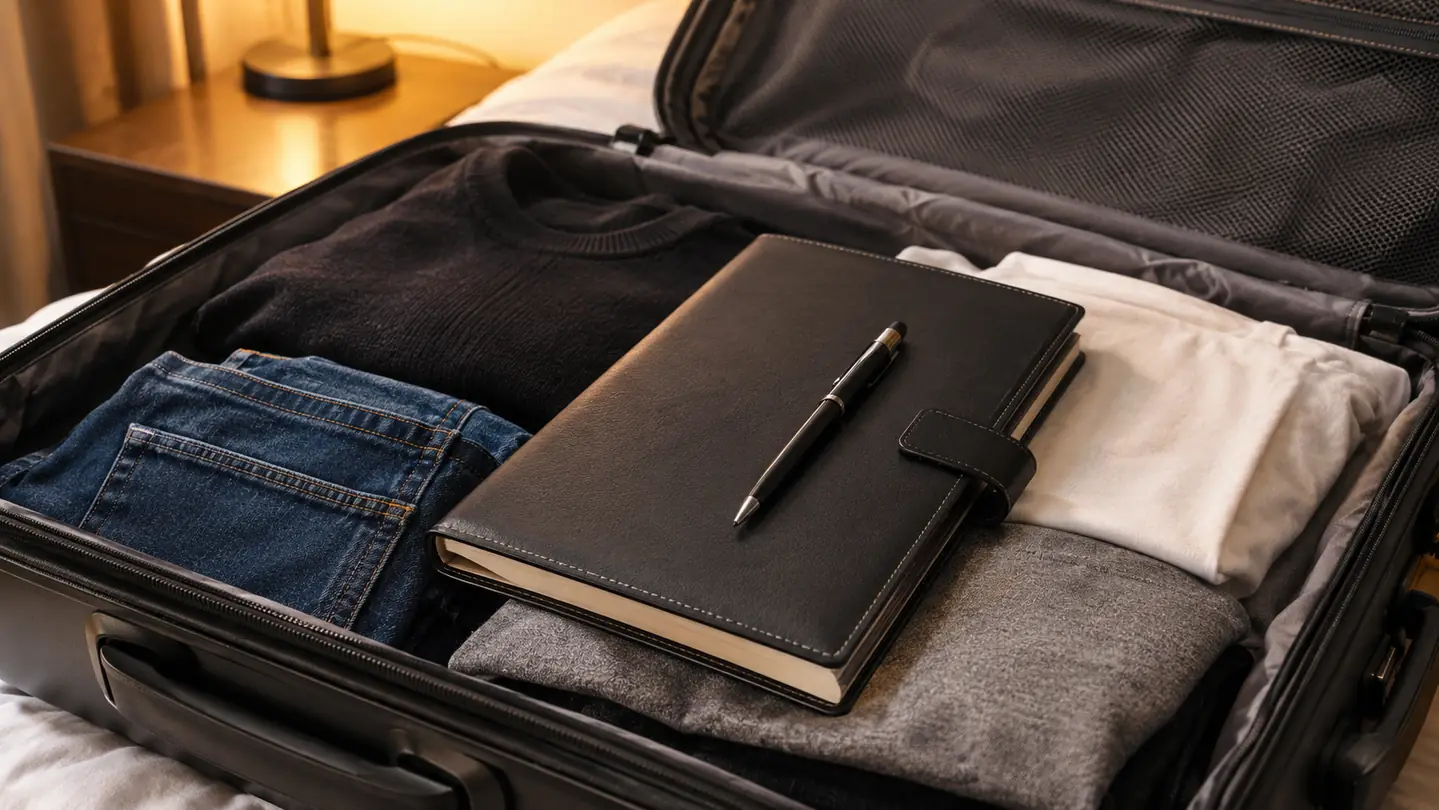
We flew Wednesday June 10, Savannah to Albuquerque with a connection in Dallas, and the binder went in my carry-on. About 2.75 pounds, hardcover, roughly 10 by 12 inches. On the second leg I went back through the vendor pages with a pencil in my hand and checked every phone number. Laptops close. Binders stay open on a tray table, and nobody asks you to put it away for landing.
Two people can look at it at the same time
Elise and I sat across from each other more than once with that book turned sideways between us. With a laptop, one person drives while the other watches a screen at an angle. With a binder, we both read the same page and pointed at it. That sounds like nothing. It is the difference between planning together and one person reporting to the other.
The pages you have not filled in yet are visible pressure
A spreadsheet has infinite blank rows, so nothing looks unfinished. The Knot planner has a finite number of pages and you can see the ones still empty. In February that bothered me. By April it was useful. It is a physical measure of how much is done, and I could flip through it in thirty seconds and know the state of the wedding without reading anything.
It does not need a charger, a login or a signal
The inn outside Santa Fe had thin cell service and I did not care. Friday night, after the rehearsal, I sat in the lobby with the binder and went through Saturday one more time with a pencil. No password, no spinning wheel, no battery. When you are finishing a wedding away from home, the tool that works when nothing else does is the tool you keep.
It leaves a record you can hand to someone else
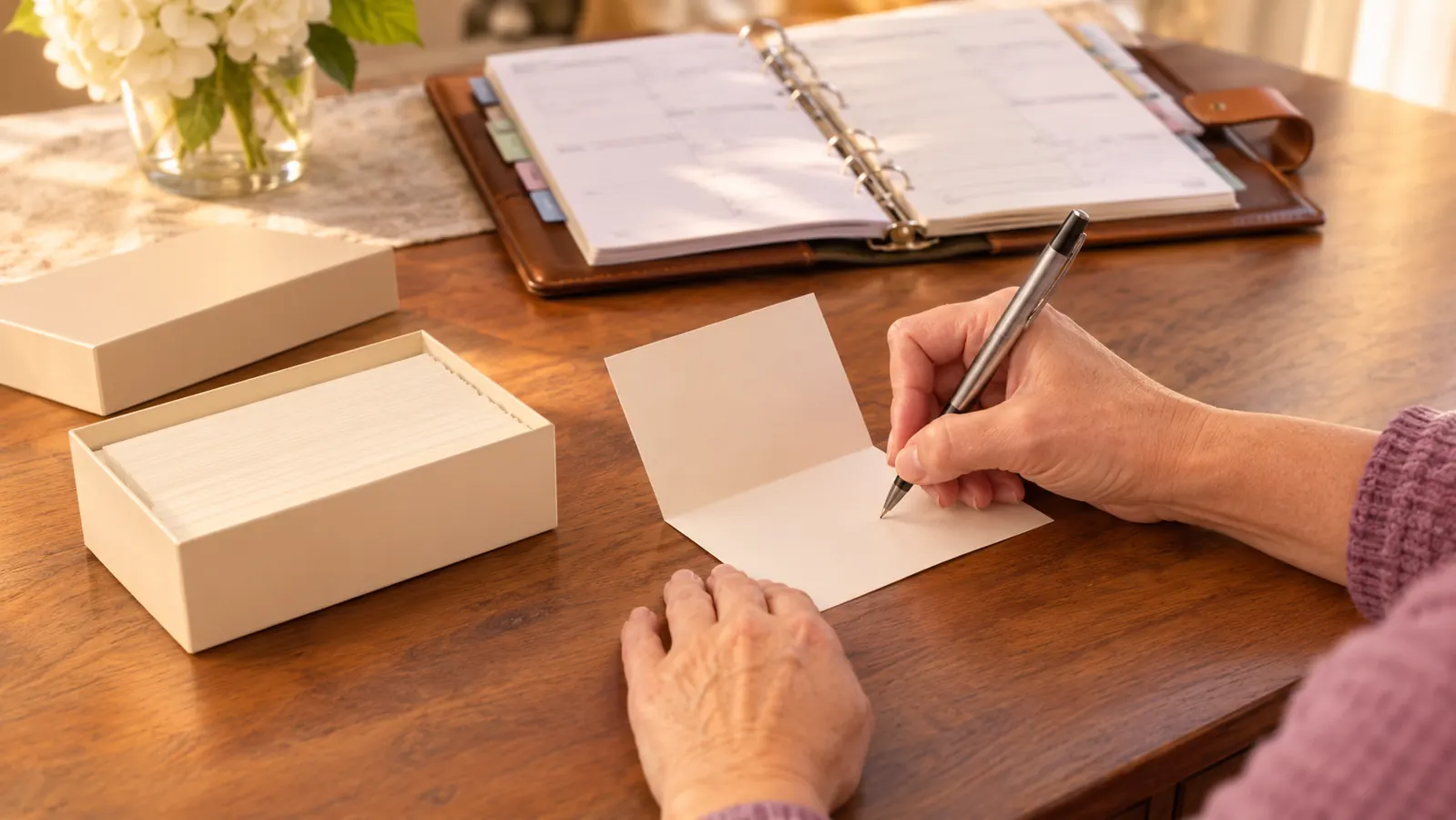
On Saturday I kept the binder, the place cards and the day-of bag close. If something had gone sideways with a vendor, anyone could have opened that book and found the contact, the deposit note and the time. The value of a plan is not that you follow it. It is that a second person can pick it up cold. A spreadsheet needs a person who knows the spreadsheet.
It is one of the few parts of the wedding you keep that is not a photograph
The dress went into a garment bag in my hall closet. The spare place cards are in their pack in the same closet. But the planner is still on a shelf within reach, with my handwriting all over it, and it is the thing I would hand Elise if she ever wanted to remember what those six and a half months actually felt like. Nobody has ever opened a spreadsheet from their own wedding out of sentiment.
What I'd Skip
I would skip the version of this where you buy the planner and then also keep a spreadsheet. Elise's spreadsheet lasted two weeks, and running it beside a binder would only have meant two half-finished systems. If you are going to use paper, use paper. Move the guest list in, close the laptop, and let the laptop go back to being a laptop. I would also skip any promise that a binder plans the wedding for you. There are 144 pages to fill in and I filled in the ones we needed by hand, over months, at that table. The book does not do the work. It keeps you from losing track of it.
Elise's spreadsheet had a color code she could not explain to me. The binder had one page open and we both understood it.
If you are deciding between paper and a phone, the honest answer is that they are good at different jobs. I am fifty-six and I have no reason to sell you a book.
One binder, six and a half months, seventy-two guests, no planner
If you are doing this yourself on a real budget, this is the cheapest piece of infrastructure you will buy. Hardcover, 144 pages, and it survives being carried around.
Amazon Check Today's Price on Amazon →