
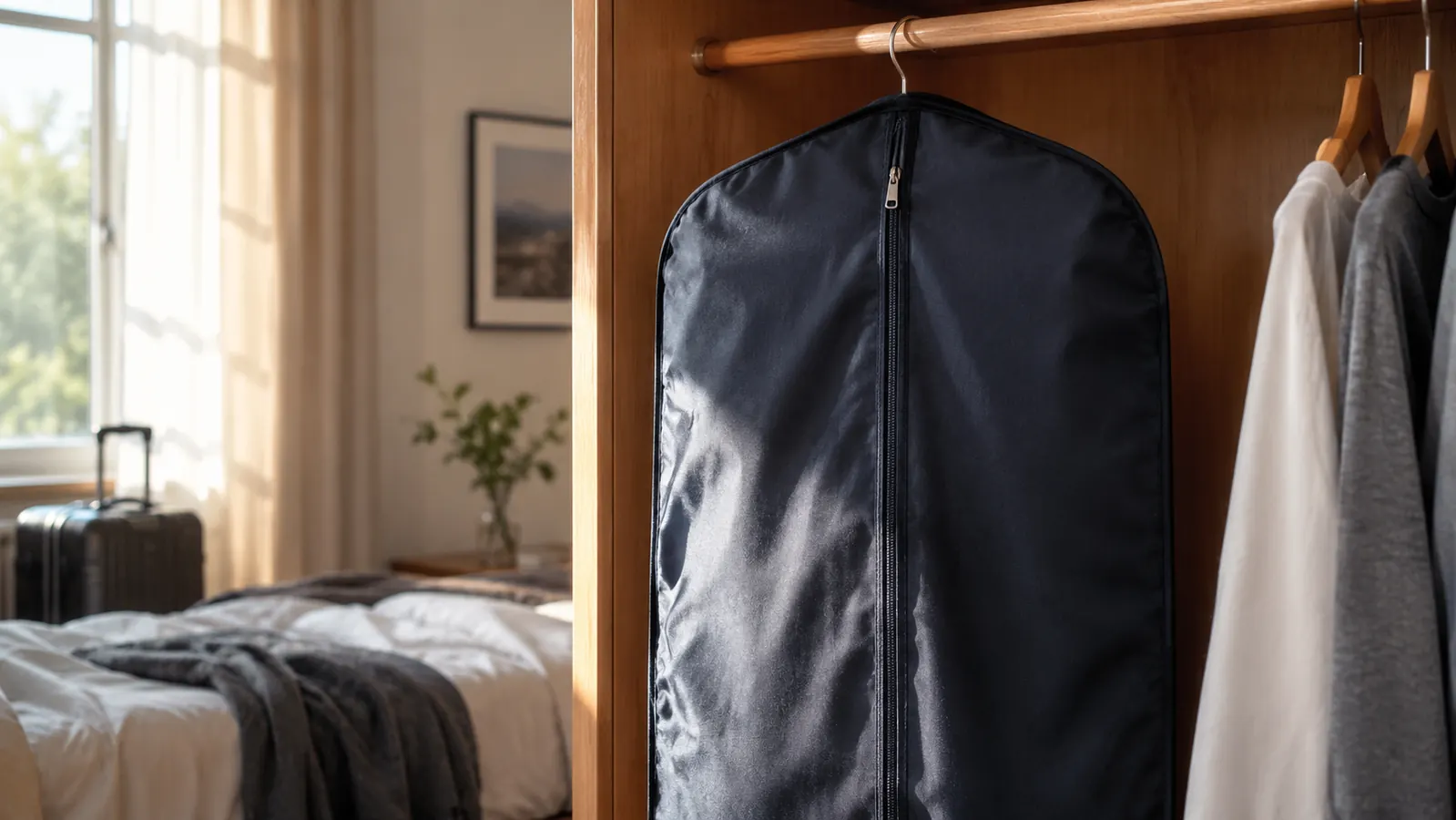
The dress came home from the bridal shop in a bag so thin I could read a receipt through it. Soft satin A-line, short train, bought in February in Savannah, handed over on a hanger inside that plastic sleeve like a dry cleaning drop-off. We had a wedding outside Santa Fe on Saturday, June 13, and a flight on Wednesday, June 10, and I kept looking at that sleeve thinking: this thing has to get through three airports, a rental car and four days of hanging, and it is not built for any of that.
So in April I bought the Sleeping Lamb 72 inch bridal garment bag. It arrived folded flat in a mailer, weighed almost nothing, and it did the one job I needed it to do: it got my daughter Elise's gown to New Mexico with a single soft fold line and nothing else. I am not a professional planner. I planned exactly one wedding, with a binder, a budget and no paid planner, while my husband Paul drove the rental car and did nothing with the paperwork. Here is what I know after one full round trip with this bag.
The Quick Verdict
A 72-inch gusseted bag that carried a satin gown through three airports and four days on a closet rod with one fold line I steamed out. Not waterproof, not structured, and it does not need to be for a dress like ours.
Amazon Check Today's Price →The bag that replaced the plastic sleeve the bridal shop handed us
72 inches long, 15-inch gusset, breathable non-woven fabric, a zipper that closes clean, and a clear pouch that takes a name card. It laid flat in the overhead bin on both legs, Savannah to Dallas and Dallas to Albuquerque.
Amazon Check Today's Price on Amazon →How I've Used It
I bought it in April, two months after the dress and two months before the wedding, because I could not make myself hand a satin gown to an airline in the shop's plastic. The bag showed up folded down to roughly the size of a folded beach towel. There is no frame in it, no board, nothing to keep it standing up on its own, and for a while I thought that was a flaw. It is not. Something rigid would have been heavier, bulkier and harder to lay flat in a bin, and the gown did not need a hard shell. It needed cover, room and something to hang from.
Between April and June it did quieter work. The dress hung in it in my hall closet for two months, which meant dust stayed off the gown and I stopped handling satin every time I walked past the door. I would unzip it, look at the dress, zip it back up, and that was the whole ritual. Nothing about satin improves with being touched, and by June I had stopped opening it at all.
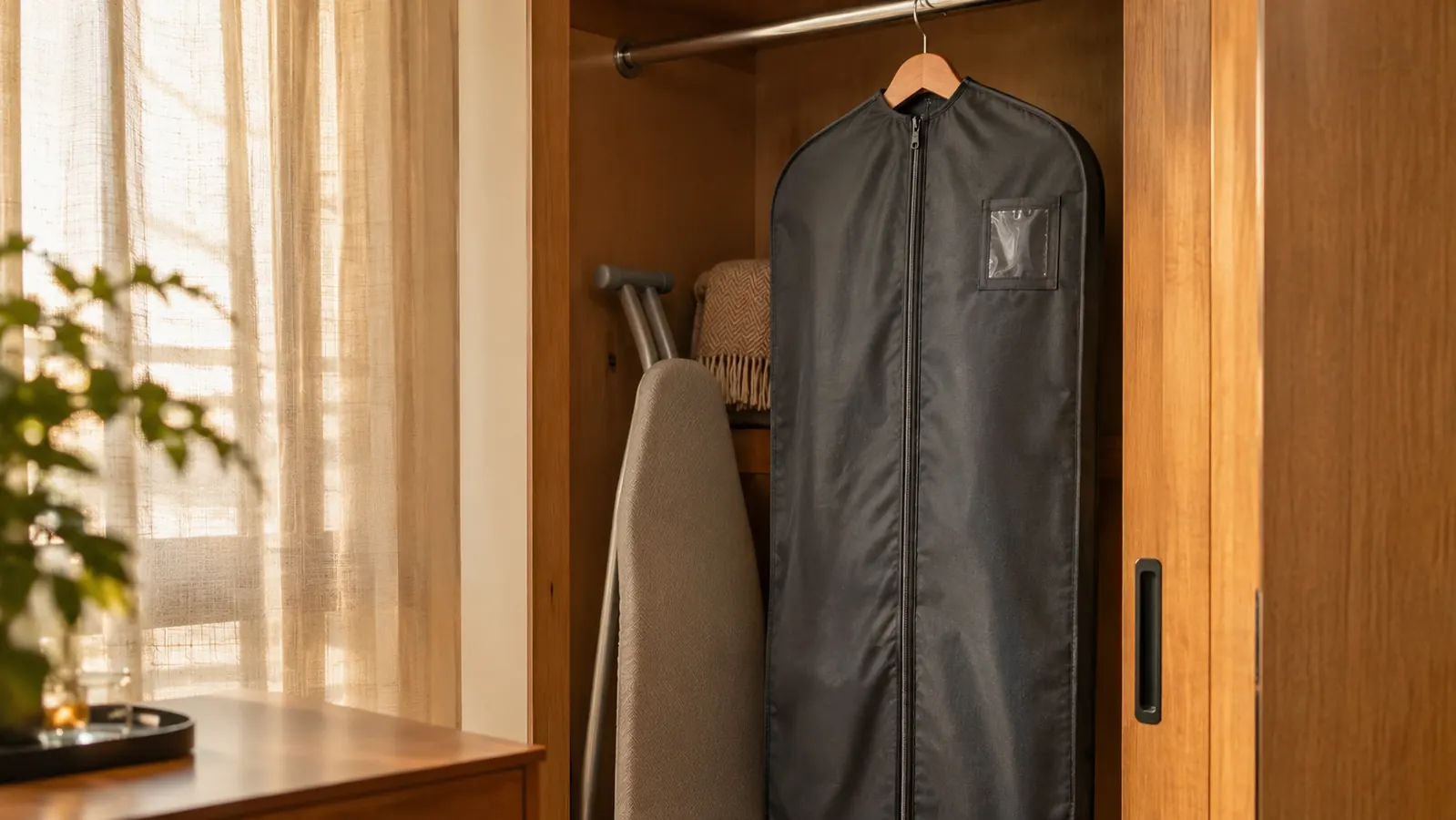
Packing it for the flight took about ten minutes. I rolled a bath towel, laid the bag open across the bed, and folded the dress once, gently, so the satin bent around the rolled towel at the fold instead of creasing against itself. Then I zipped it shut, wrote Elise's name and my cell number on a small card and slid it into the clear pouch. That pouch sounds like a nothing detail until you are handing a long black bag to someone in an inn hallway.
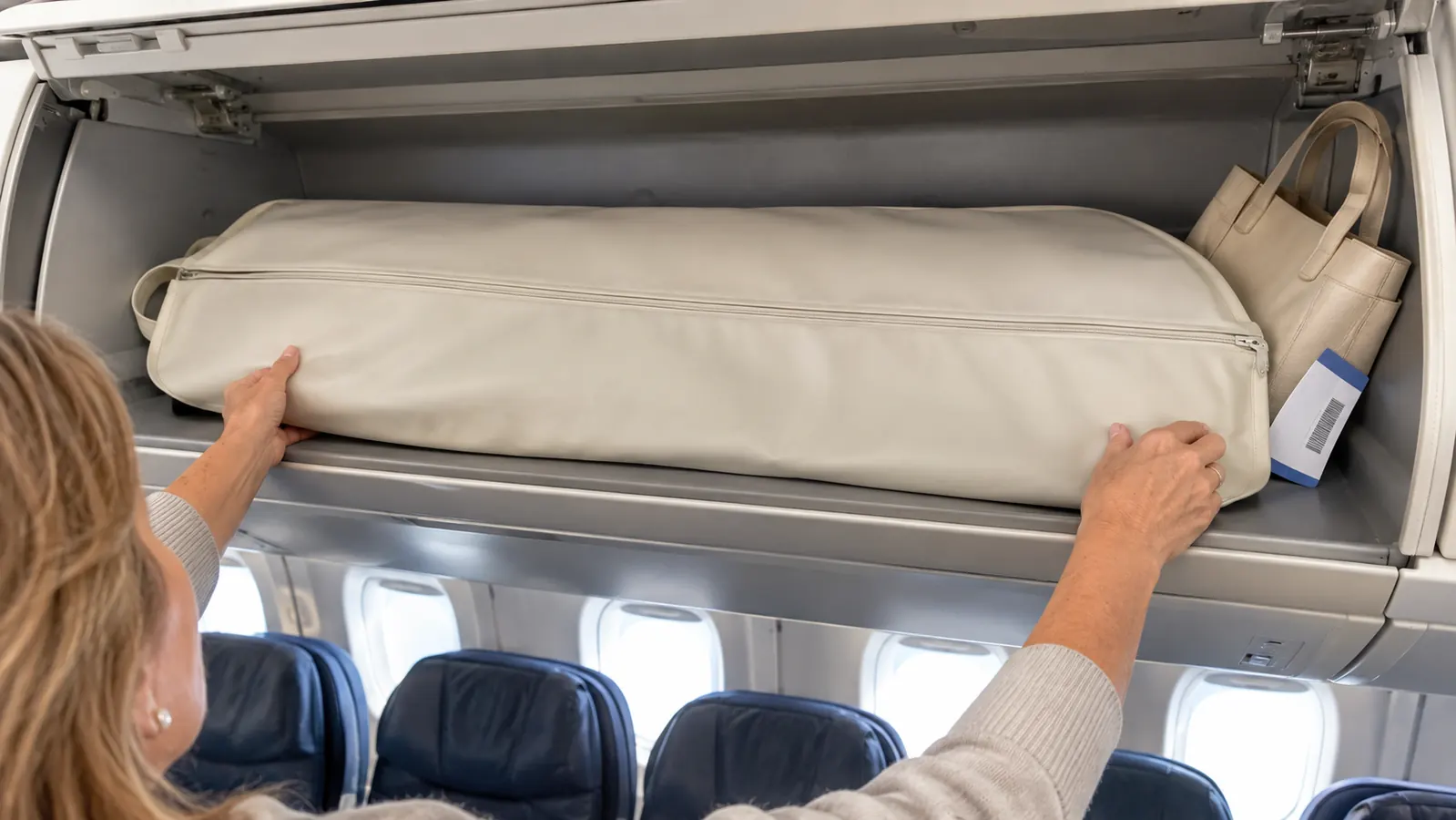
On both legs it went in the overhead bin as my carry-on rather than being checked. I laid it flat, lengthwise, which is what the 15-inch gusset makes possible. It did not go in a suitcase, it did not go in a bin at the gate, and it did not leave my sight between Savannah and Albuquerque. That was the whole point of buying it.
What the 72 Inches and the 15-Inch Gusset Actually Mean
Seventy-two inches is the number that decides whether this bag is right for you. A gown on a hanger with a short train needs vertical room, and 72 inches gives it enough that the hem of Elise's dress sat well clear of the bottom. The bag also clears a standard door frame with a few inches to spare, so I carried it through the inn's hallway without tilting it or dragging it. If you have ever watched someone carry a too-long dress bag at an angle through a doorway, you know why that matters.
The 15-inch gusset is the second number, and it is the one people skip over. A flat garment sleeve compresses a dress into a thin sandwich, which is fine for a shirt and wrong for a satin A-line. Fifteen inches of depth means the gown lies in the bag with air around it instead of being pressed between two sheets of fabric. Tulle, a short train, a lined bodice: all of it sits rather than flattens. That depth is also the reason the bag can lie flat in an overhead bin without the dress being crushed under a rolling suitcase.
The fabric is a breathable non-woven, listed at a 100G weight, and the closure is a zipper. I zipped and unzipped this bag at home in April, at the inn and at the end of the trip, including at an awkward angle while standing in the closet at the inn, and the zipper did not catch or misalign once. Breathable matters more than people think. A gown sealed in plastic for four days in a warm room is a gown sealed in plastic for four days in a warm room. Non-woven fabric keeps dust off and still lets air move.
The Flight: Savannah to Albuquerque, One Connection in Dallas
We flew out Wednesday, June 10, all three of us, Savannah to Albuquerque with a connection in Dallas, then about an hour by rental car to Santa Fe. The bag was in my hand the entire way. I want to be straight with you about one thing: at 72 inches, this bag is longer than the published carry-on dimensions most airlines list, and the rules differ from carrier to carrier and change. I laid it flat in the bin on both legs and nobody said a word about it, but that is my experience on one trip, not a guarantee. Call your airline before you fly. If you are not willing to make that call, do not buy this and assume.
In the bin it behaved exactly as I wanted. It went in lengthwise, flat, with my small tote tucked beside it. Nothing sat on top of it.
The hour in the rental car from Albuquerque was the part I had not thought through. Paul drove and the bag rode across the back seat, folded once, for the whole drive. It is light enough that this was no trouble. It would fit across a back seat without folding at all if you have the space, and if I were doing it again I would lay it flat on the seat, close the doors and not touch it until we arrived.
Wednesday to Saturday: Hanging at the Inn
We got in Wednesday afternoon. The inn had a proper closet in our room with a real rod, not one of those hooks on the back of a door, and the Sleeping Lamb bag went up on it and stayed up until Saturday morning. That is where the length earns its keep again. Hung on the rod, Elise's dress cleared the floor with room to spare, so the train was not sitting on the closet floor collecting whatever closet floors collect.
There was one soft fold line across the satin where the dress had bent around the rolled towel. One. Not a crease, not a crush mark, a soft line you could see if you stood at the right angle in the right light. On Thursday night I ran the shower hot with the bathroom door closed and hung the dress in there for about twenty minutes, and by Friday morning the line had relaxed. Saturday afternoon, at the ceremony, nobody looked at that dress and thought about a bag.
Monday morning we zipped it back up for the trip home, and it came back to Savannah exactly as it went out. It now lives in my hall closet with the dress inside it, which is a better arrangement than a plastic sleeve on a wire hanger, and it will stay that way until Elise decides what she wants to do with the gown.
What It Is Not
It is not waterproof. Non-woven fabric keeps dust off a gown and lets it breathe, and that is the whole of the promise. Set this bag down in a puddle, or leave it on a wet pavement while you load a car, and water is going to find its way in. I kept mine off the floor in the airport and hung it the moment we reached the room, and I would tell anyone the same. If you need rain protection, put the whole bag inside a clean trash bag for the walk from the car, which is what people did before anybody sold a bag for this.
It is also not a dress box. At the bridal shop I saw the boxes they sell, the big structured ones with tissue and a lid, and for a heavily beaded or boned gown that has to travel in the trunk of a car, a box is the more protective choice. A box is also a thing you have to carry with two hands and then store in a closet afterward for the rest of your life. This bag folds flat, hangs on a rod and takes one hand. For a soft satin A-line with a short train, that trade was the right one for us.
What I Liked
- 72 inches of vertical room, enough for a satin A-line with a short train to hang with the hem well clear of the floor
- The 15-inch gusset lets the gown lie in the bag with air around it instead of being pressed into a flat sandwich
- Breathable non-woven fabric keeps dust off without sealing the dress in plastic for days
- The zipper closed clean every single time over one round trip, including at an awkward angle in the closet at the inn
- The clear pouch takes a name card, which matters when two long bags are in the same hallway
- Folds flat and stores on a closet rod, which is where it lives now with the dress still inside
Where It Falls Short
- Not waterproof, and it does not claim to be
- No structure at all, so it will not protect a beaded or heavily boned gown from a hard knock
- At 72 inches it is longer than the published carry-on dimensions most airlines list, so the bin is a judgement call and you should call your carrier first
- The fabric is thin enough that a sharp corner in a bin could catch it if you are careless loading it
One soft fold line across the satin, relaxed by Friday with the steam from a hot shower and a closed bathroom door. That was the entire damage report from Savannah to Santa Fe and back.
Who This Is For
This is for the bride who is flying to her own wedding, or the mother of the bride who is the one carrying the dress because the bride has enough to think about. It is for a soft gown, satin or crepe or chiffon, with a train that needs to hang rather than fold. It is for a wedding where nobody hired a planner and the logistics are being handled at a kitchen table by somebody with a binder and a list. And it is for anyone who cannot face the idea of checking a wedding dress in a suitcase and hoping.
It is also for the smaller wedding. Ours was 72 guests at nine round tables of eight, and there was no bridal suite with a steamer and an attendant. There was a closet, a rod and a bathroom shower, and this bag fit that reality. If your venue has a suite and a professional steaming the gown the morning of, you may not need to own one of these at all. If you are doing it yourself, you probably do. The two things I would pair with it are a flat-lay plan for the day and a way to keep the dress from sitting on a floor.
Who Should Skip It
Skip it if your gown is heavily beaded, boned or has a long structured train that needs to hold a shape. That dress wants a box, and a soft bag will not do the job no matter how carefully you fold it. Skip it if you plan to check the dress as luggage. A soft bag in a cargo hold with other people's suitcases is a soft bag under a pile of suitcases, and no zipper is fixing that. And skip it if you are not willing to make one phone call to your airline about the length, because 72 inches is longer than the carry-on rules are usually written for and I do not want you finding that out at a gate.
One more case for skipping it: if the dress is already at the venue, steamed and hanging, and you are driving twenty minutes to get there, a clean sheet over a hanger will do. This bag earns its place when the dress has to travel a real distance, sit in a closet for several days and come home again. That was our situation. It may not be yours. If you are weighing the Sleeping Lamb bag against a dress box, the short version is that they solve different problems.
If your dress is flying with you, this is the bag that went in the bin
One round trip, one fold line, and a gown that hung clean from Wednesday to Saturday. 72 inches long, 15-inch gusset, breathable non-woven fabric, clear pouch for a name card. Call your airline about the length and then stop worrying about the dress.
Amazon Check Today's Price on Amazon →