
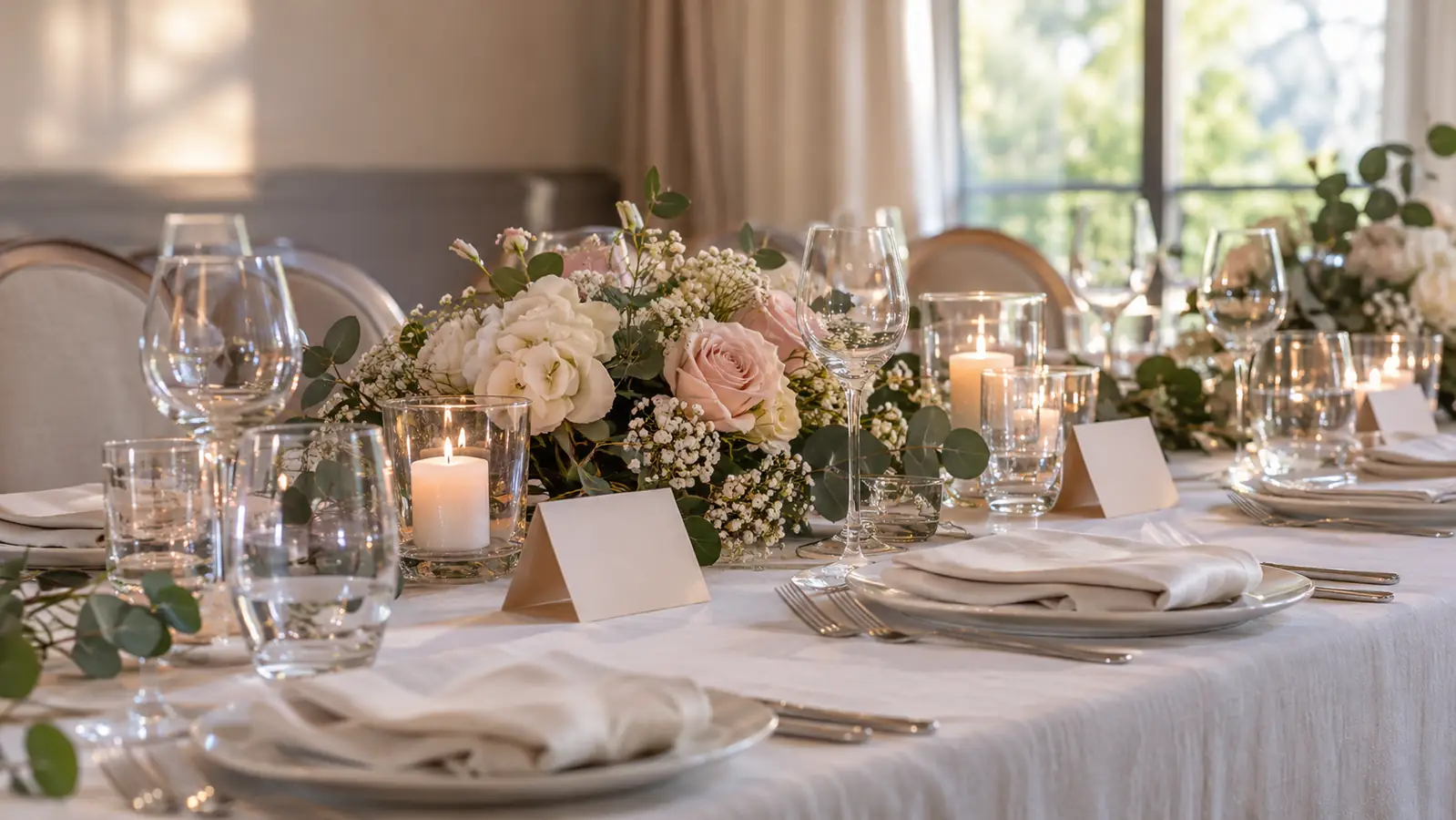
Seating is the part of a wedding that looks effortless on the day and eats whole evenings beforehand. I learned that at my kitchen table in Savannah, with a guest list on one side and a binder that got heavier every month. When it came time to put 72 names on 72 cards for my daughter Elise's wedding at a small inn outside Santa Fe, I bought the Toncoo place cards in April, two months out. Then I wrote all 72 myself in May, over two evenings, with a black fine-point pen and the radio on.
The pack holds 120 cards. I used 72 for guests, a few more for the dessert table, and the rest stayed in the pack. That is the short version. The longer version is about the width of the card, the way a tent fold behaves on a linen tablecloth, and what two evenings of handwriting actually cost you in a month that is already full. Those are the things I would want to know if I were buying again.
The Quick Verdict
A generous pack of small folded cards that does one job well. Buy it for a wedding of 100 or fewer, write in fine point, and keep the spares for the food tables.
Amazon Check Today's Price →The pack that turned a guest list into a seating chart
120 folded tent cards, 3.5 by 2 inches, gold foil border. Enough for a 72 guest wedding plus every food and gift table in the room.
Amazon See the Toncoo place cards on Amazon →How I've Used It
I ordered in April, the same week I started the seating chart in the binder. The cards arrived flat, in a stack, and I put them in a shoebox on the shelf above the washing machine, which is where I keep things I cannot afford to lose. They stayed there until May, when I sat down at the kitchen table on a Tuesday and a Wednesday and wrote 72 names.
There was an earlier plan and it did not last. The only spreadsheet we ever had was the one Elise started on her laptop after the engagement, and she dropped it after two weeks. From then on the seating chart lived in the binder, in pencil, and got erased and rewritten more times than I can count. Paper and pencil turned out to be the only format that survived the changes. That was the frame of mind I was in when I ordered the cards: nothing that needed a screen to work.
Then they went back in the shoebox and into my suitcase. We flew out on Wednesday, June 10, Savannah to Albuquerque with a connection in Dallas, then about an hour by rental car with Paul driving. The cards rode flat in the suitcase, under the bag of toiletries. Nothing bent and nothing slid out of the pack. On Saturday at two I set them out on the tables, and that was the end of it.
Elise and I split the work the way we split everything from December onward. She left who sat where to me. I did the paperwork: the binder, the place cards, the day-of bag. She chose the dress and the guest book. Paul drove the rental car and touched none of it. That division is worth mentioning because it is the reason I ended up writing the cards at all. The seating chart was mine to finish.
What Is Actually in the Pack
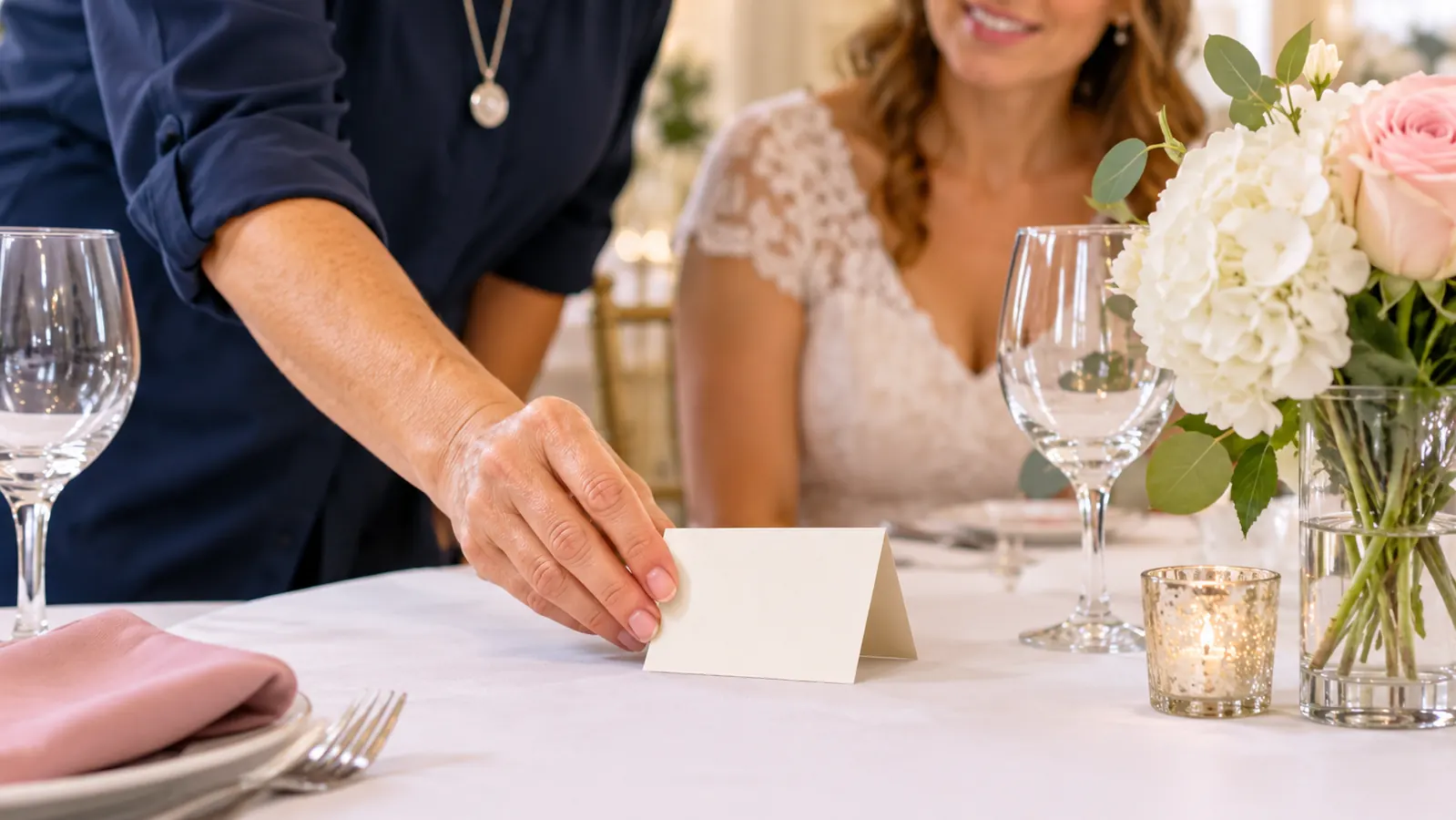
120 cards, paper stock, folded to 3.5 by 2 inches and measuring 3.5 by 4 inches when opened flat. The whole pack weighs about a quarter of a kilogram, which is why it disappears into a suitcase and why I never thought about it again until May. Each card carries a gold foil border and folds into a tent, so it stands on the table by itself with nothing behind it.
For scale, 3.5 by 2 inches folded is about the footprint of a standard index card stood on end. It is smaller than my palm. The gold foil border runs close to the edge on all four sides, which frames the space you write in and quietly tells you how much room you have before you overrun it. It reads as the standard shape rather than a trimmed-down version of it.
That is the entire product. There is no pen, no printed template, no guide to tell you how large to write. If you were hoping for a card you feed through a printer, this is not that. It is a pack of folded cards and it does what folded cards do. Whether it earns its place in your bag comes down to one question: are you willing to hand-write your guest list?
A card printed by a shop can look like a menu cover. No cards at all can mean 72 adults standing around a room holding plates and asking each other where to sit. The hand-written card lands closer to the printed version than you would expect. Nobody at the table studies the card. They find their name, they sit down, and the room settles.
Writing 72 Names by Hand
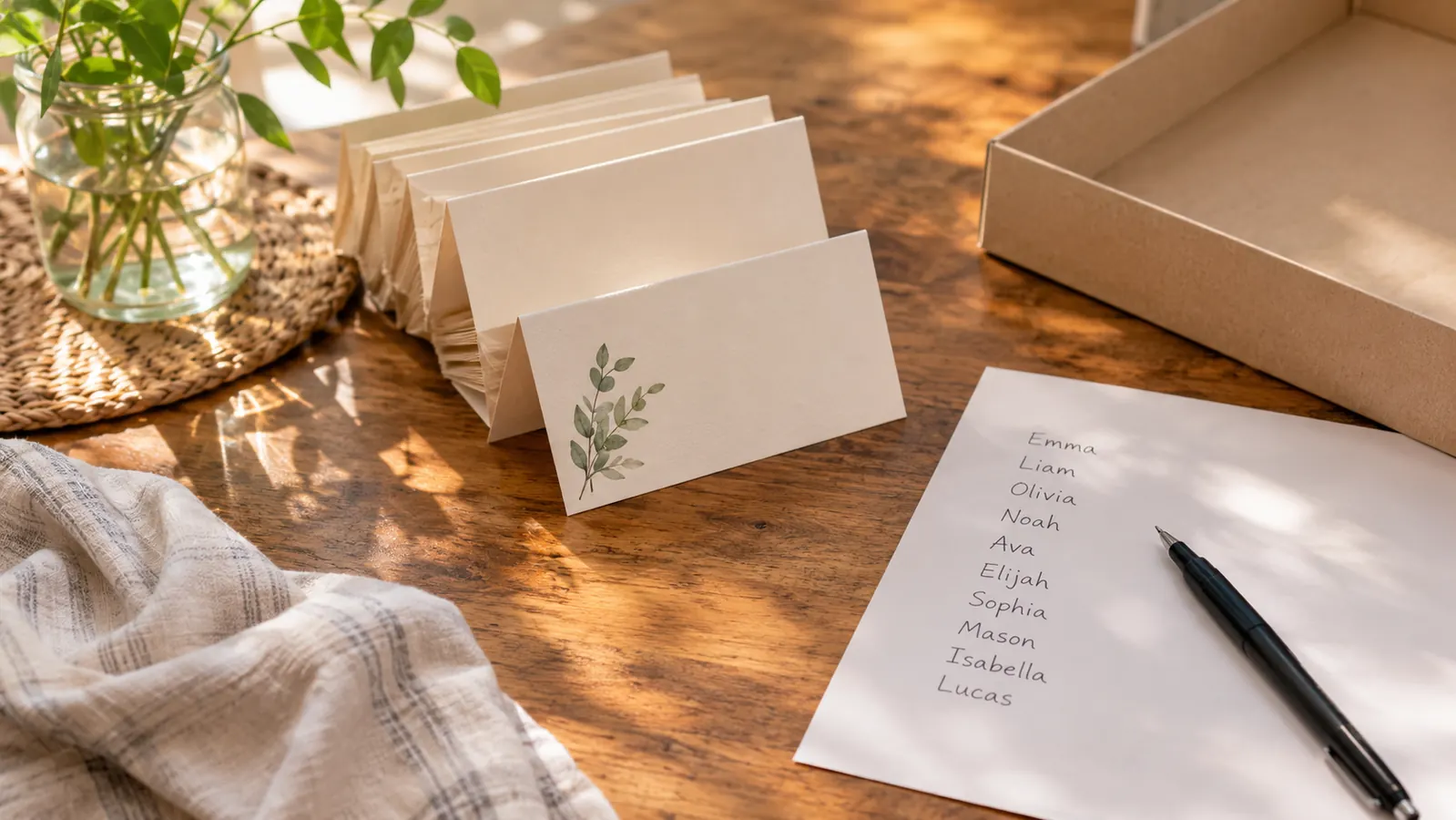
Two evenings, at the kitchen table, with the binder open to the seating list on my left and the stack of Toncoo cards on my right. Tuesday I did tables one through five. Wednesday I did six through nine. Call it an hour and a bit each night, including a break to answer a text from Tess about shoes.
I used one of the spares to practise before I touched a real name. The black fine point went down clean, so I wrote a full name on that practice card, folded it, and stood it in front of me as a model for the 72. If you have a steady hand and good handwriting you can skip that step. I had neither, so I did not skip it.
The card sets its own rules. At 3.5 inches wide and 2 inches tall when folded, a first and last name in fine point fits comfortably with room on both sides. A first name, a last name and a table number does not. I wrote first and last names, first names alone for the children, and let the standing table numbers do the rest, because I had already decided that guests should not have to do arithmetic while holding a glass.
Two things I would do the same way again. Write the names in seating-chart order, not guest-list order. Skipping around is how you lose your place and write a name twice. And give each card a moment before you move on, so the ink has time to dry. A fine-point pen on this stock dries quickly, and not one of mine smudged.
One tip from the pen. A flourish on a last name can run the tail of a letter up into the gold foil border, so if you are the sort of person who will look at that card every time you walk past the table, write a size smaller than feels natural and keep the ink away from the edge.
How They Held Up on the Day
Saturday at two I was in the reception room with the shoebox under one arm and the binder under the other. Nine tables of eight takes about twenty minutes if you do it in an order: walk to table one, set eight cards out on the napkins, check each name against the list in the binder, move to table two. The binder copy and the cards matched on the first pass, which is a small mercy I had not counted on.
Every card stood up on its own on a linen tablecloth, which is not a given with folded cards. Thinner cards can bow at the fold and tip forward. These did not, because the fold is set and the paper is heavy enough to hold the shape once you crease it properly.
The reception was indoors and the room was not breezy. I want to be straight about that, because a tent card on an outdoor table in a gust is a different problem and no paper card solves it. If you are planning a reception on a lawn or a terrace, plan on weights or pebbles, or accept that a few cards will go over before dinner.
The gold foil did more than I expected. Set next to a plain card, it catches candlelight and reads as though someone printed it. Two guests asked me where I had them made. I said I wrote them in May at my kitchen table, and one of them did not believe me until I showed her the leftover stack. That is a good ten seconds of a wedding.
The few extras went to the dessert table, labelled in the same pen. That is the part nobody tells you about. You do not need 120 cards for 72 guests, but you will want more than 72, and this pack had the spares already in it instead of a second order in June.
Nine tables, 72 names, and not one card went over. Nobody looked at the handwriting. They found their name and sat down.
The Tradeoffs Worth Knowing
The size is the real tradeoff. 3.5 by 2 inches is small enough to look elegant and small enough to constrain you. Long names get tight. A prefix or a suffix gets tighter. If your guest list is heavy on double surnames, or you want the table number on the same card as the name, this is not the card for that job and I would look at a wider one.
The paper is paper. It will not survive a spilled drink or an evening outdoors in damp air, and it will not look like the heavy letterpress stock you see in photographs. It looks good. It does not look expensive, and it does not need to, because it is sitting next to a bread plate.
And there is a labour cost the listing cannot show you. Whatever you save by writing the cards yourself, you spend in two evenings at the table. I liked those evenings. It was the first time the seating chart felt like a real room instead of a grid in the binder. But if you do not have two evenings in May, or you know yourself well enough to know you will put it off until the week of, order printed cards and give yourself the gift of being finished.
What I Liked
- 120 cards in one pack, so a 72 guest wedding plus every food and gift table is covered with spares left over
- The folded tent shape stands on its own on a tablecloth without propping or weights
- The gold foil border reads closer to printed stationery than to plain card
- Packs flat and travels in a shoebox inside a suitcase without bending
- Leftovers stay useful afterwards for labelling tables at the reception
Where It Falls Short
- 3.5 by 2 inches is tight for a long name plus a table number
- Paper stock rather than heavy card, so it will not survive rain or a windy outdoor table
- No pen, template or printed guide in the pack, so the handwriting is entirely on you
- Writing 72 cards takes two evenings you have to find in an already busy month
Place Cards, Not Escort Cards
One distinction worth making, since the two words get used for each other. An escort card tells a guest which table to go to. A place card sits at the setting and tells them which chair. These are place cards. They do the second job and they do it well, but they do not replace a chart by the door if your guests cannot find their table on their own.
In our case there was no chart by the door. The seating chart stayed in the binder, guests found their names by walking the room, and the Toncoo cards handled the settings. If you are still sorting out which of the two you actually need, it is worth ten minutes before you order anything, because buying the wrong one of the two is a very common and very fixable mistake.
Who This Is For
This is for the couple, or the mother of the bride, planning a wedding of roughly 100 guests or fewer without a full-time planner, who is willing to hand-write names and would rather spend two evenings than a printer's invoice. It suits an indoor reception with a seated dinner and linen on the tables. It suits anyone who already keeps a binder and does the paperwork themselves, because these cards fit that life without asking anything new of you except a steady hand and a fine-point pen.
Who Should Skip It
Skip these if the reception is outdoors on a breezy afternoon, if the guest list runs past about 110, if you need table numbers printed on the same card as the name, or if you know in your bones that you will not sit down in May to write 72 cards. Skip them if you want menus and programs to match, because these are cards and not a stationery suite. There is a version of this where a printer handles all of it and you get your evenings back, and for plenty of people that is the right answer.
If you are writing the names yourself, start with the right card
120 folded tent cards, 3.5 by 2 inches, gold foil border. Enough for a 72 guest wedding and every food table in the room, with spares for the next church supper.
Amazon Check the Toncoo place cards on Amazon →